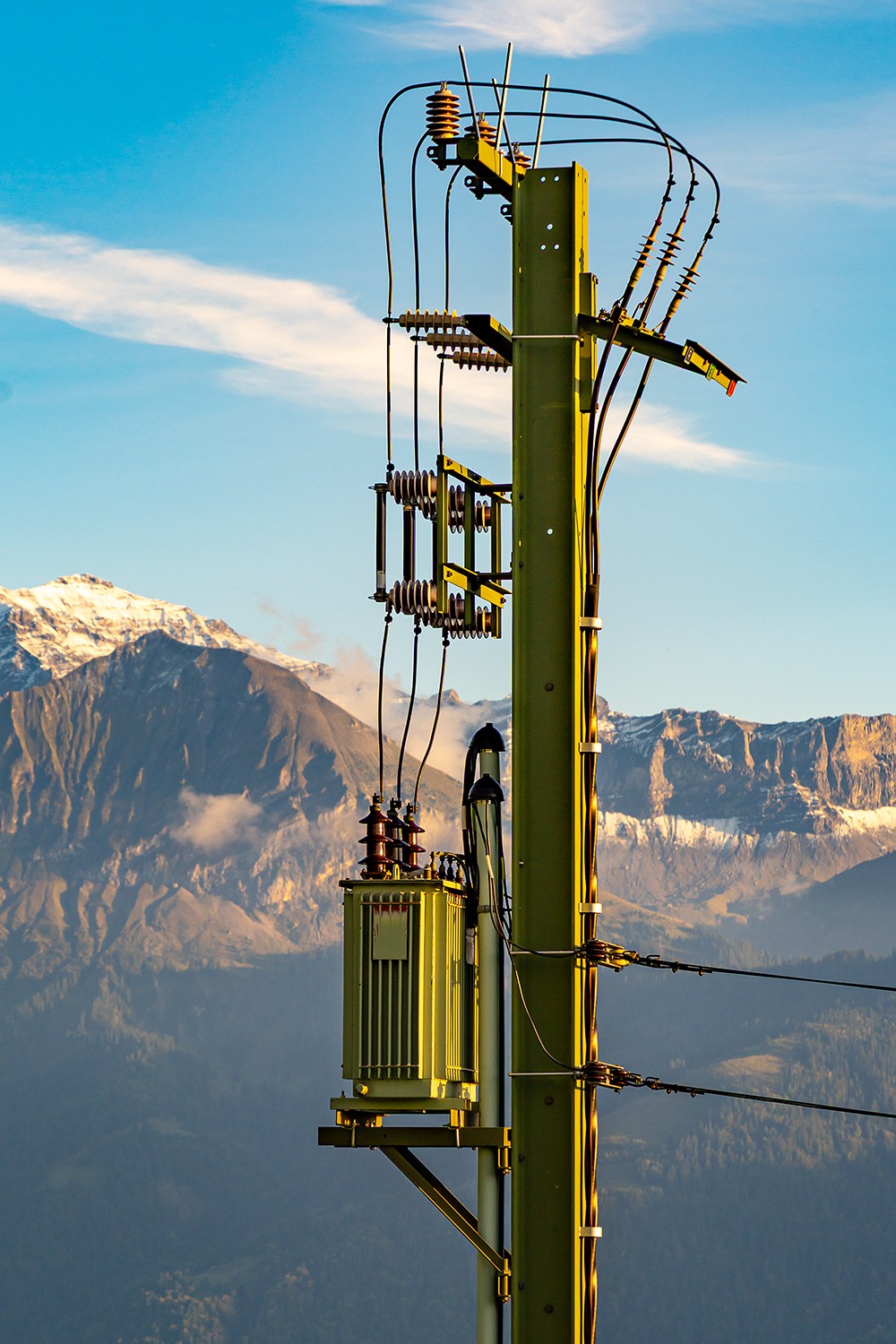
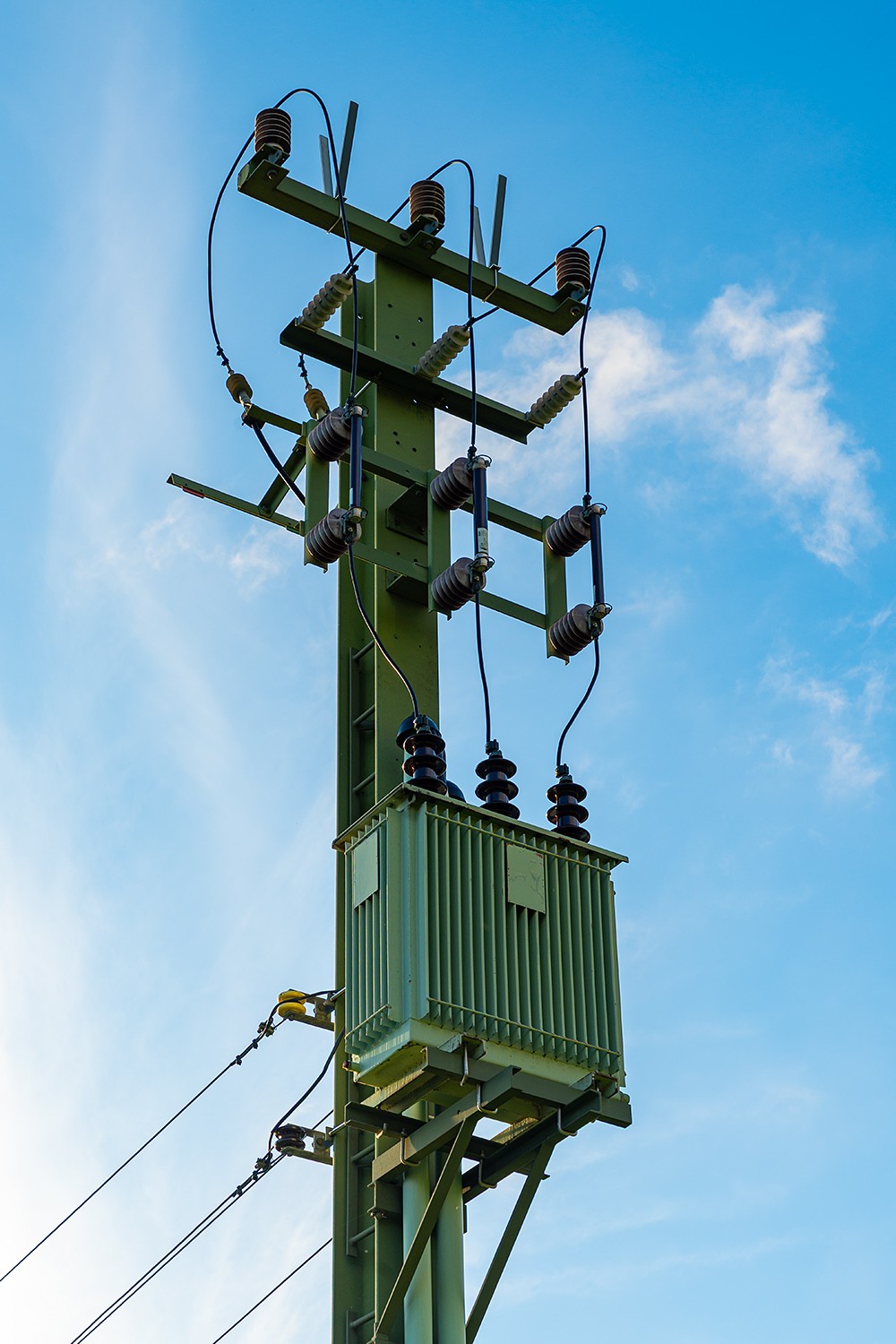
A pole-mounted transformer is a transformer mounted on an overhead line pole. Due to the high weight of transformers, pole-mounted transformers are only used in the DACH region in medium-voltage networks at electrical voltages up to about 30 kV. They are usually used to supply a local, small-scale low-voltage network from the medium-voltage network.
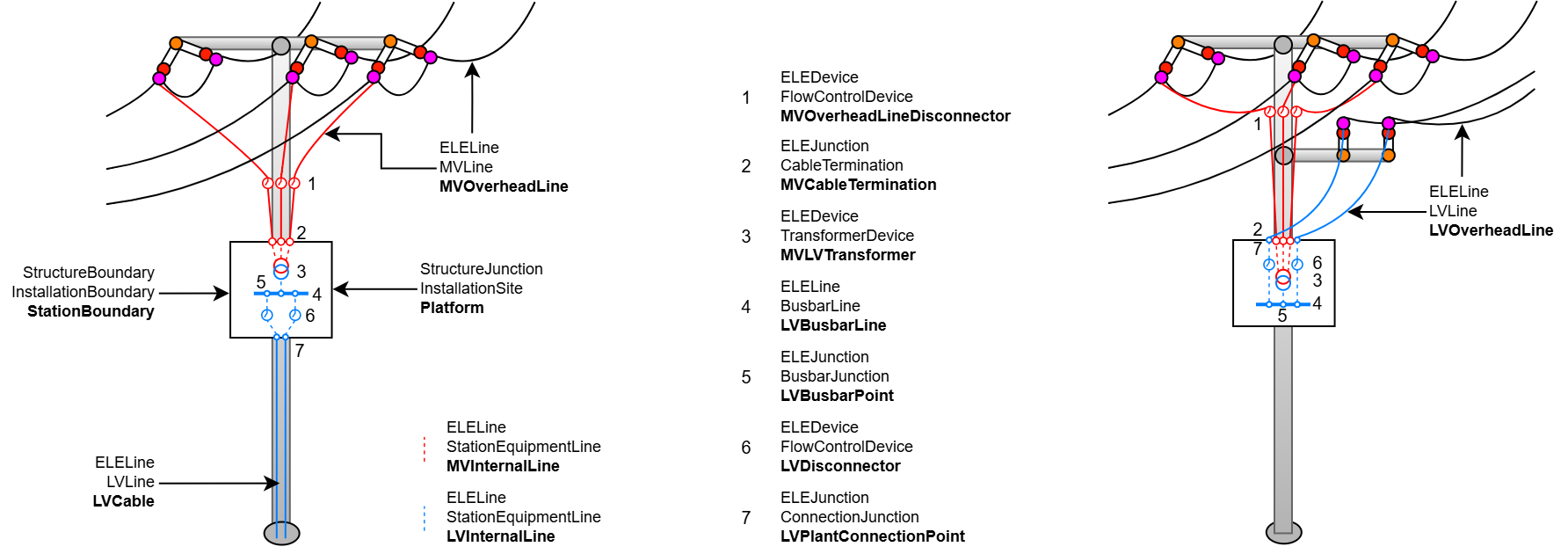
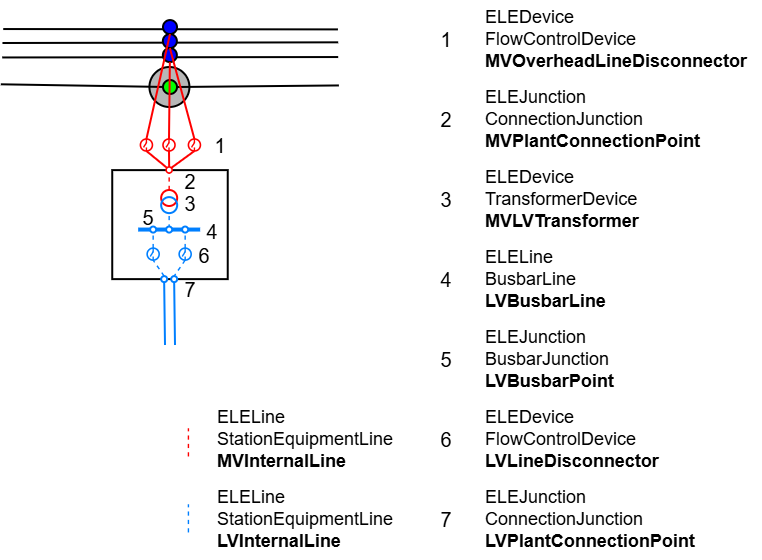
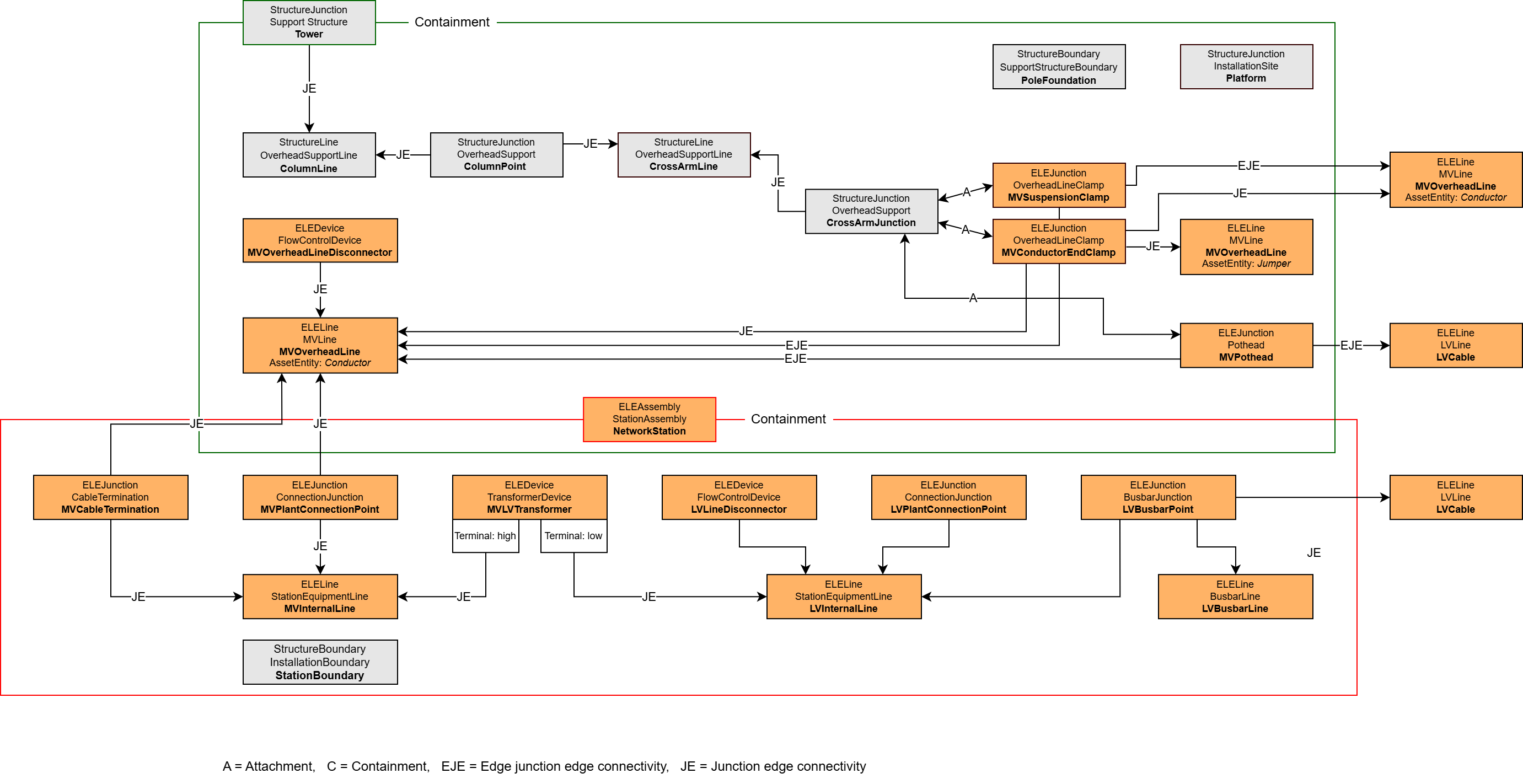
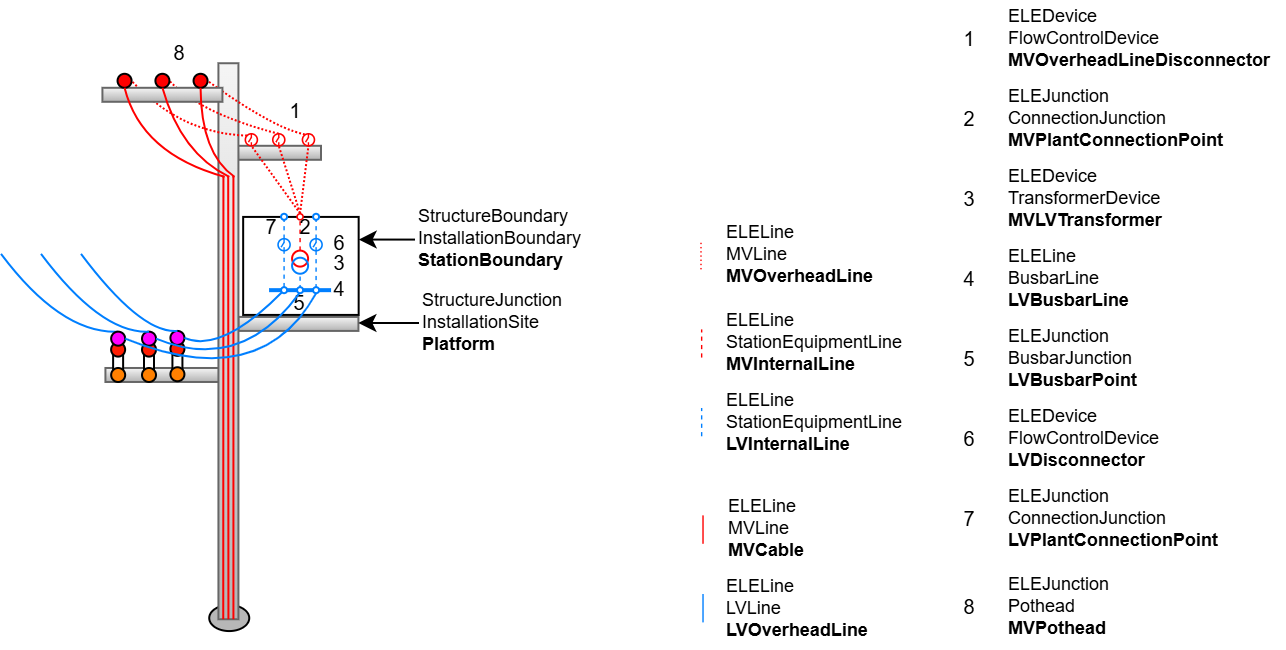
Main transformer from underground medium voltage to low voltage overhead lines. The pole transformer is modeled as a StationAssembly of the type NetworkStation, which is contained within the structure. From the SuspensionClamp or EndClamp, a MVOverheadLine extends to the MVOverheadLineDisconnector and from there continues to the MVPlantConnectionPoint or MVCableTermination. This is the transition to the transformer assembly within the StationBoundary. The connection to theMVLVTransformator is made with an MVInternalLine; from this point, the three phases are considered as a single conductor. The transformer is fed through the terminal: High. On the other side, the output takes place at the terminal: Low, from here the current flows through the LVInternalLine and the LVBusbarPoint to the LVBusbarLine. Here it is distributed and routed through further LVBusbarPoints and LVInternalLines to the LVDisconnectors. Additional LVInternalLines lead to the LVPlantConnectionPoints, which form the output of the pole-mounted transformer. From here, the current is carried further via LVCables.
left: transition from medium voltage to underground low voltage, right: transition to low-voltage overhead line
Creation in 2D:
The relationships between the objects are as follows:
Only the network station itself is included as containment in the structure, because containment nesting is not possible.
Pole-mounted transformer with end termination: Transition from three-phase, underground medium voltage through end terminations to the pole-mounted transformer, outgoing as low-voltage overhead line |