Conflicts occur when the same feature has been edited differently in two versions (the default version and a job version). Both workers and supervisors may need to resolve conflicts during their workflows.
When do Conflicts Occur
Conflicts arise in two scenarios:
For Workers
When reconciling to bring the latest changes FROM the default version TO their job version:
•Worker wants to sync latest updates from default into their working version
•Same feature was edited in both the default and job versions
•Worker must resolve conflicts before continuing work
For Supervisors
When closing a job to bring changes FROM the job version TO the default version:
•Supervisor wants to merge completed work into default
•Same feature was edited in both versions
•Supervisor must resolve conflicts before closing the job
Conflict Notification
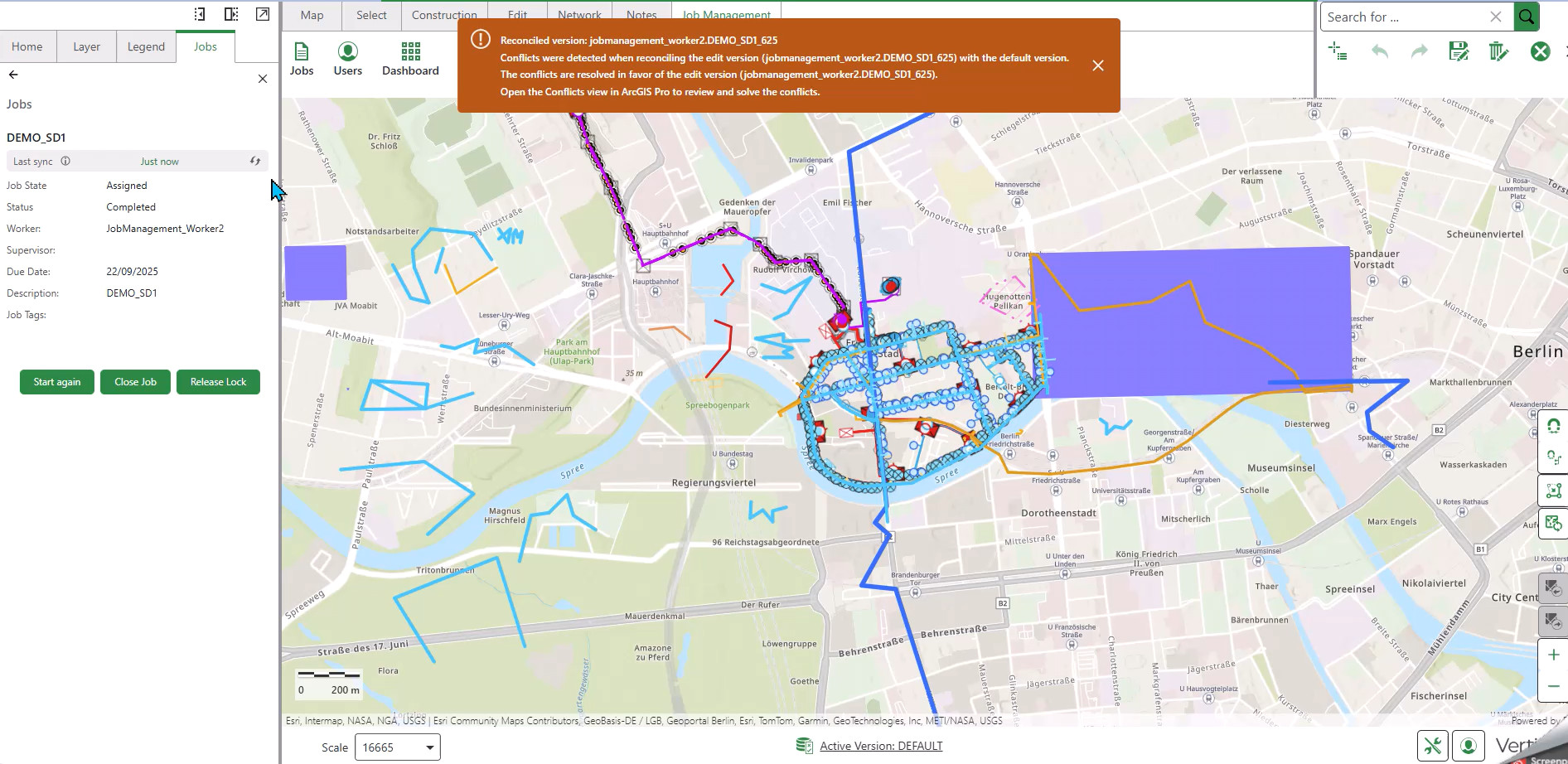
When you click the Reconcile button (refresh icon) and a conflict exists, you will receive a notification indicating that conflicts must be resolved before proceeding.
When conflicts are detected, a panel opens displaying a tabular view of the conflicting properties:
•Default version: Shows the feature state in the default version
•Branch version: Shows the feature state in the job version
•Field values: Displays all fields and their values in both versions
•Visual representation: The geometry row shows a graphical representation of the feature in both versions, allowing you to visually compare the differences
Resolution Mode Configuration: Your organization's administrator configures whether conflict resolution is automatic or manual. This setting applies to all reconcile operations in your system.
Automatic Resolution
If your organization is configured for automatic conflict resolution:
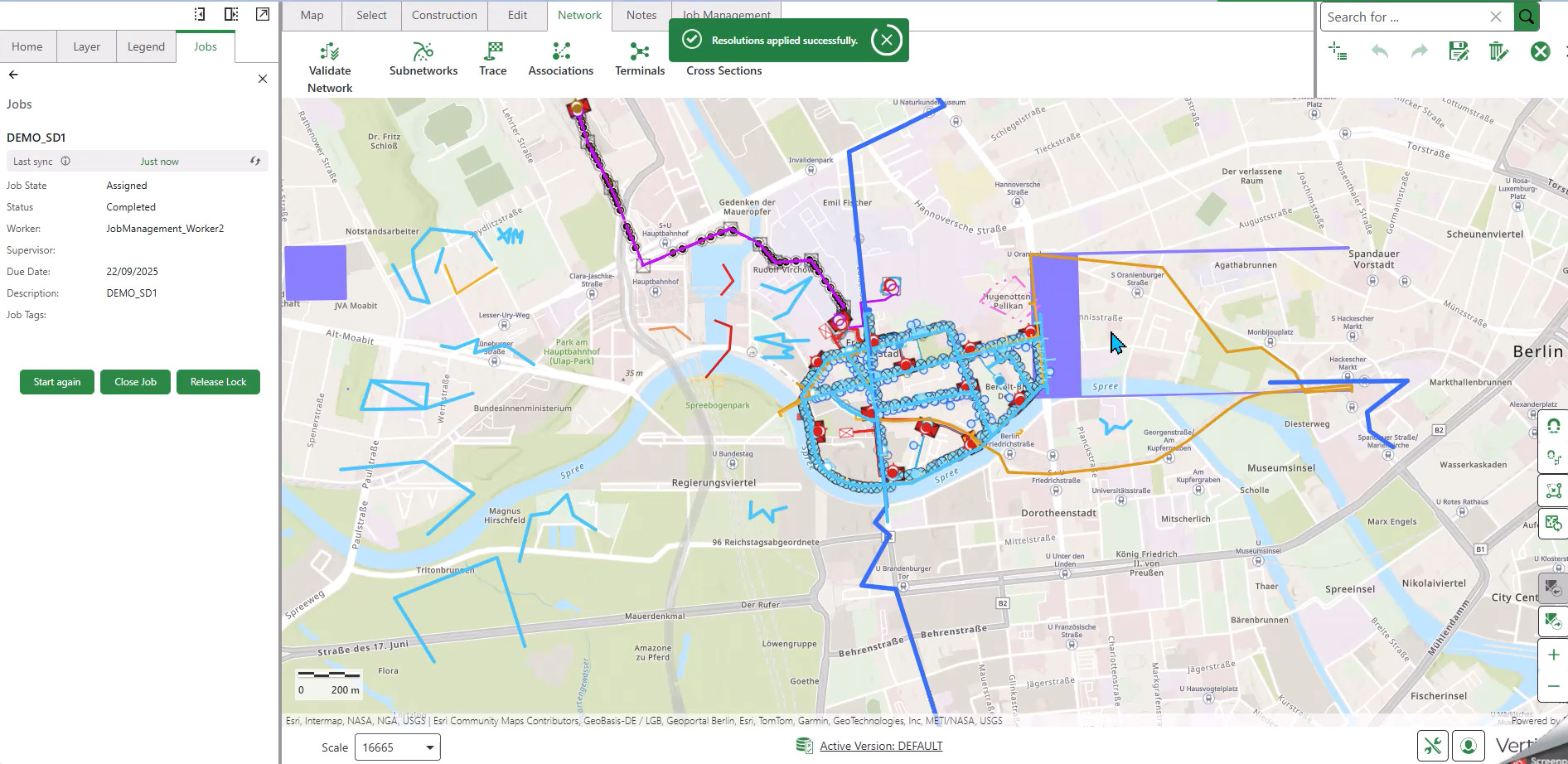
1.You will receive the message: "Resolutions applied successfully"
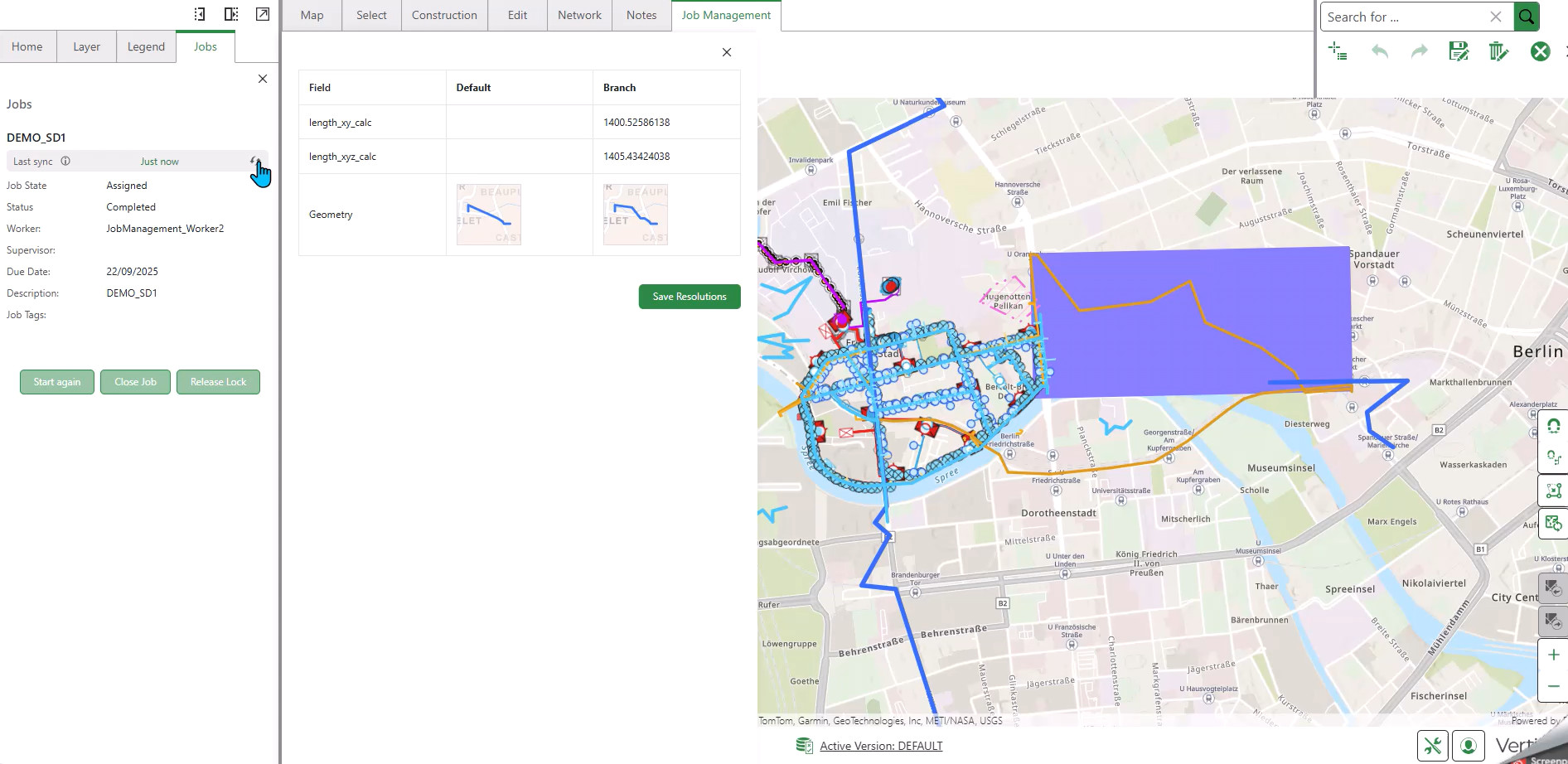
2.The conflict interface displays the tabular view of conflicts
3.No checkboxes appear for selecting between versions
4.The system automatically determines which version to retain
5.Click Save Resolution to apply the automatic resolution
6.The feature on the map updates to display the applied changes
Manual Resolution
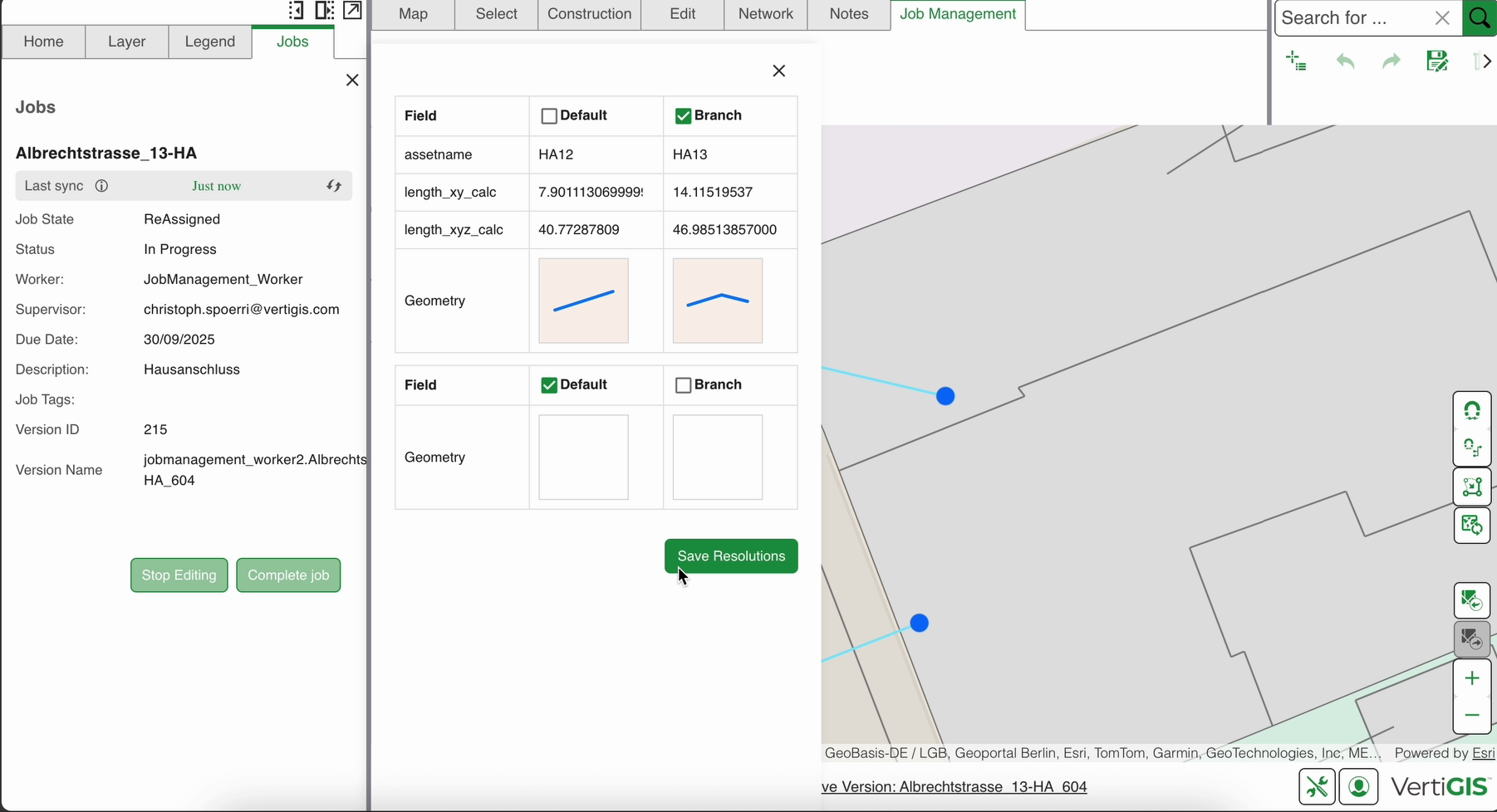
If your organization is configured for manual conflict resolution:
1.The conflict interface displays the tabular view with checkboxes
2.For each conflicting property, you will see two checkboxes:
oDefault: Select to retain the default version's value
oBranch: Select to retain the job version's value
3.Review each conflict carefully
4.Select the checkbox for the version you want to keep
5.The unchecked version will be discarded
6.Use the visual geometry representation to help decide which version to retain
7.Click Save Resolution after making all selections
8.You will receive the message: "Resolutions applied successfully"
9.The feature on the map updates to display the applied changes
Manual Resolution Advantage: Manual resolution gives you complete control over which changes to keep for each conflicting property, allowing you to make informed decisions based on your knowledge of the work.
Validation After Resolution
After successfully resolving conflicts, validate your data to ensure integrity.
To validate the resolved data:
1.Navigate to the Network tab.
2.Click Validate Network.
3.Select Extent Only as the validation option.
4.Click Verify.
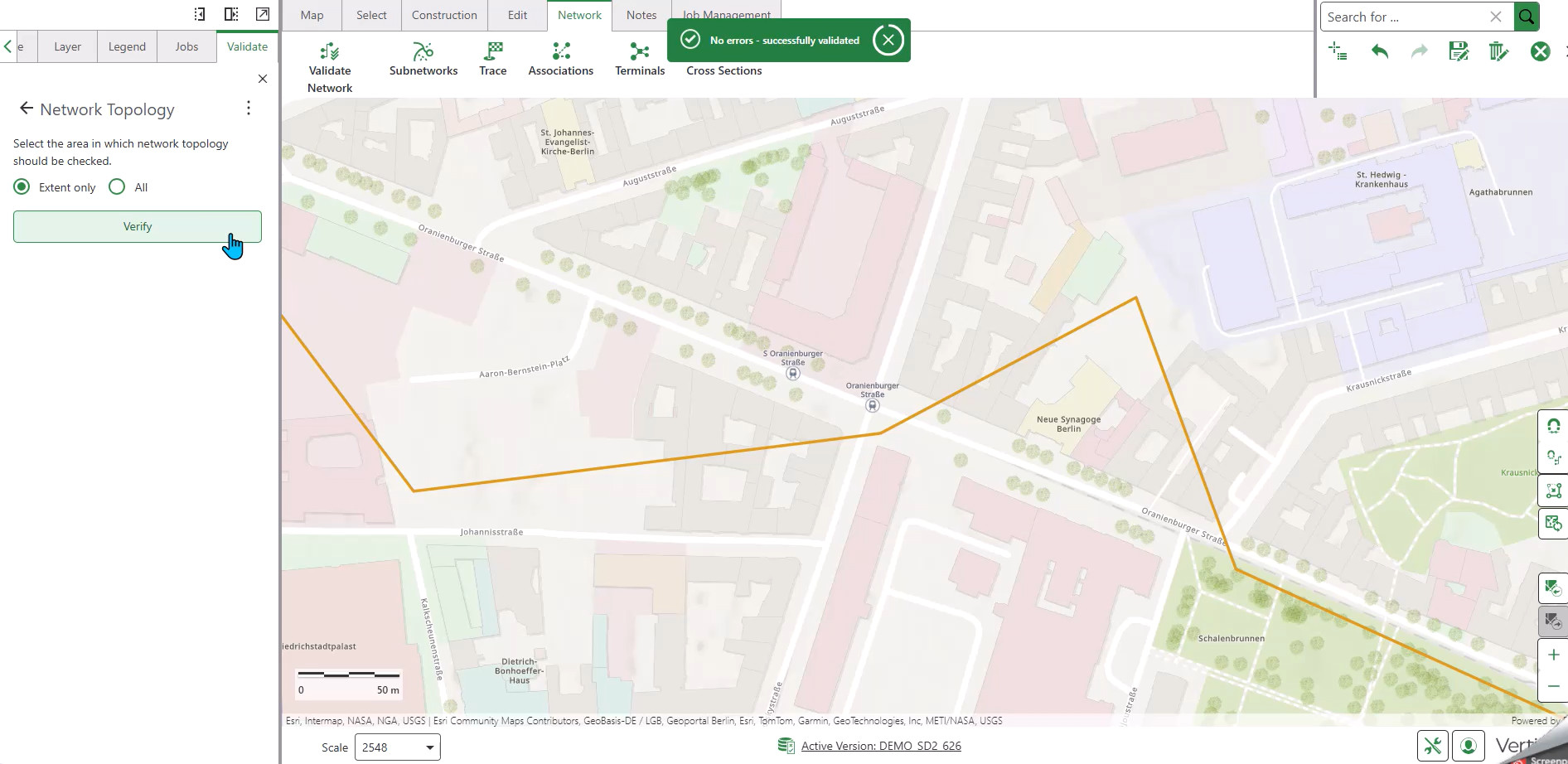
If validation succeeds, the message "No errors - successfully validated" appears.
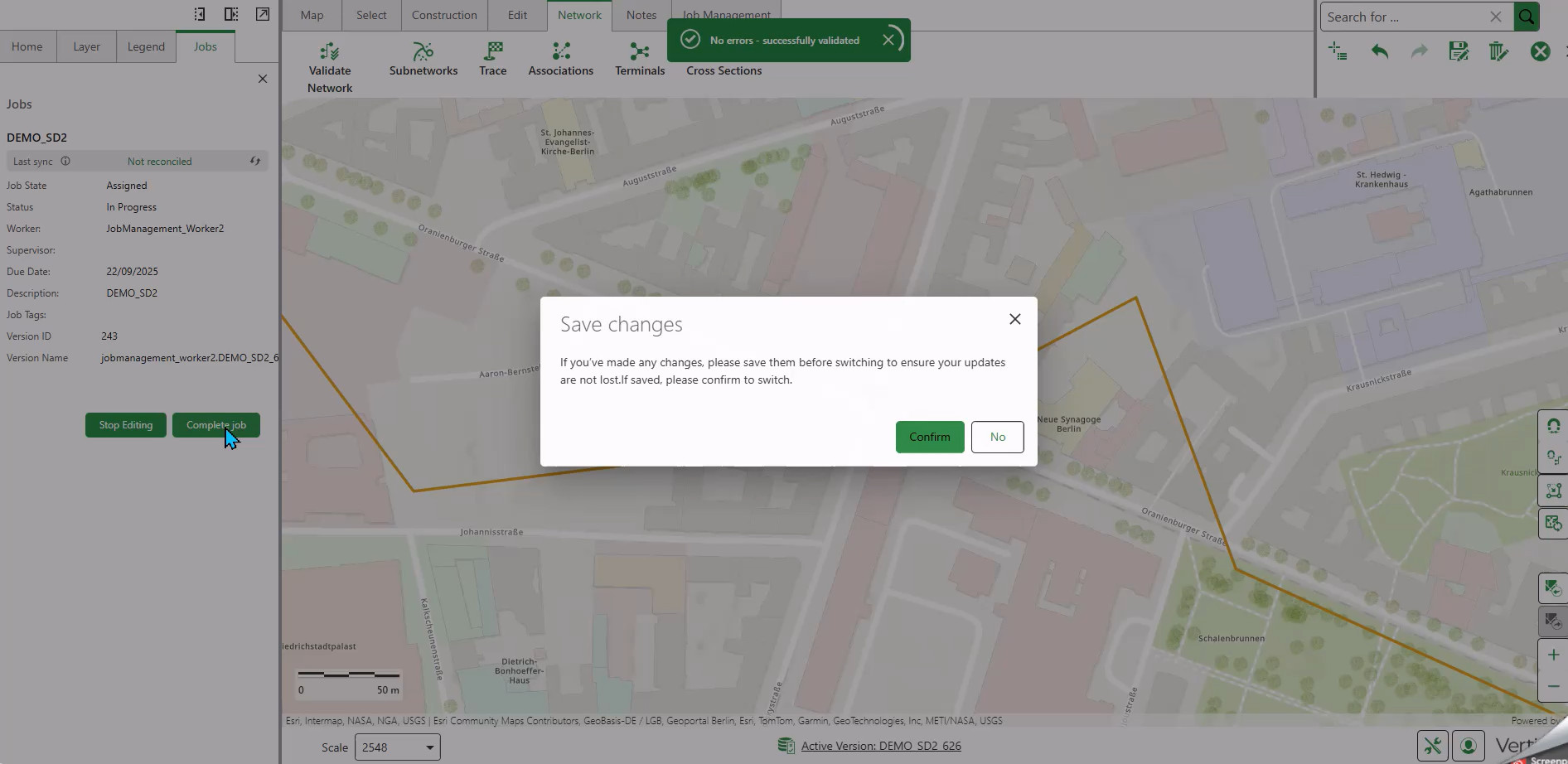
Next Steps
After resolving conflicts and validating:
•Workers: Continue working on the job or complete it
•Supervisors: Proceed to close the job