Circuit breakers are protective switches that are designed for switching high currents. In contrast to load switches, circuit breakers can not only switch regular operating currents and low overload currents, but also high overload currents and short circuit currents in the event of faults (generator circuit breakers up to 800 kA), hold these fault currents for a predefined time and switch them off safely without damage. Circuit breakers are built single-pole or three-pole.https://de.wikipedia.org/wiki/Schutzschalter
They are used for safety in the network against overvoltage. They are passive control elements, or safety elements, but they also switch the network.
Links in this paragraph point to German Wikipedia entries.
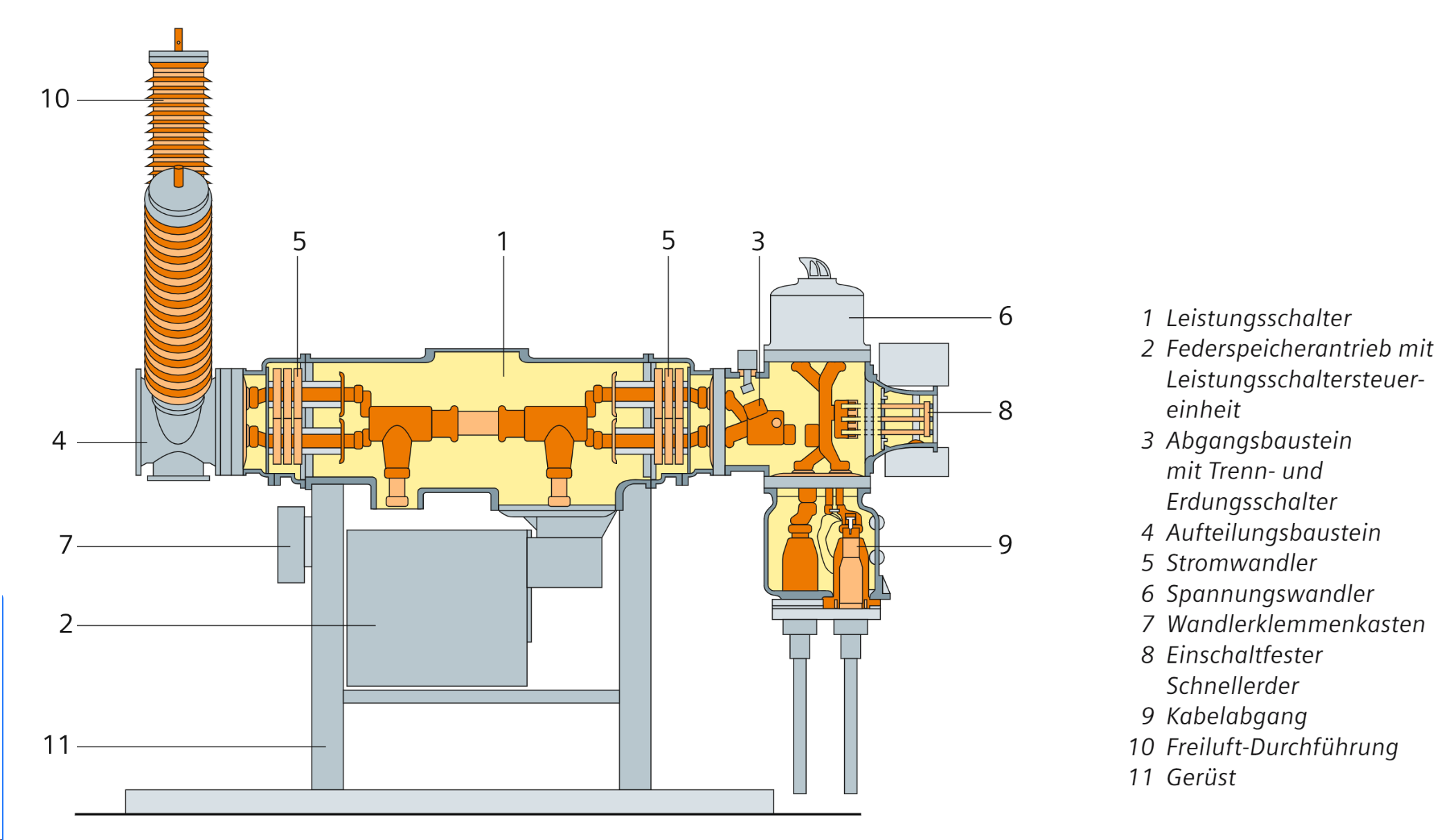
 | EHVCircuitBreaker [412] |
|
| HVCircuitBreaker [432] |
|
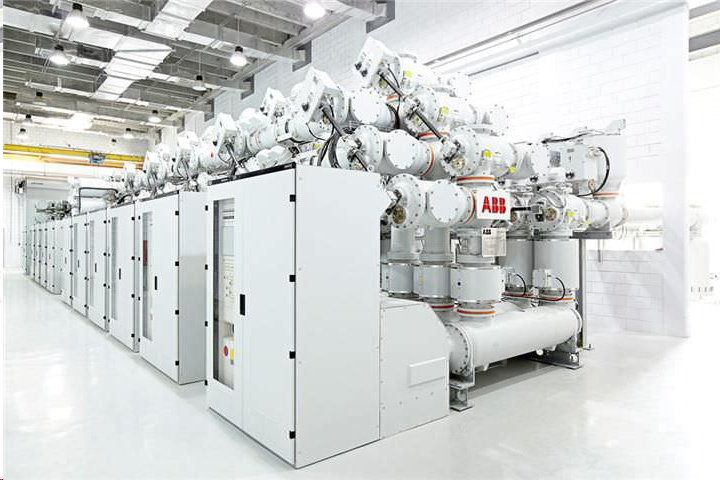
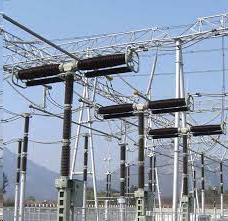
| MVCircuitBreaker [452] |
|
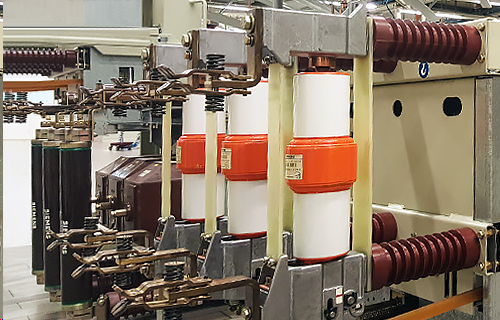
| LVCircuitBreaker [472] |
|
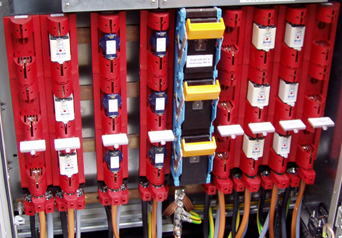
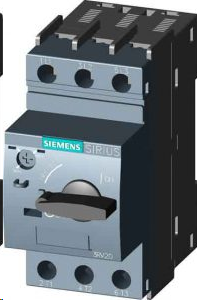
| LVFeederPanel [473] |
|
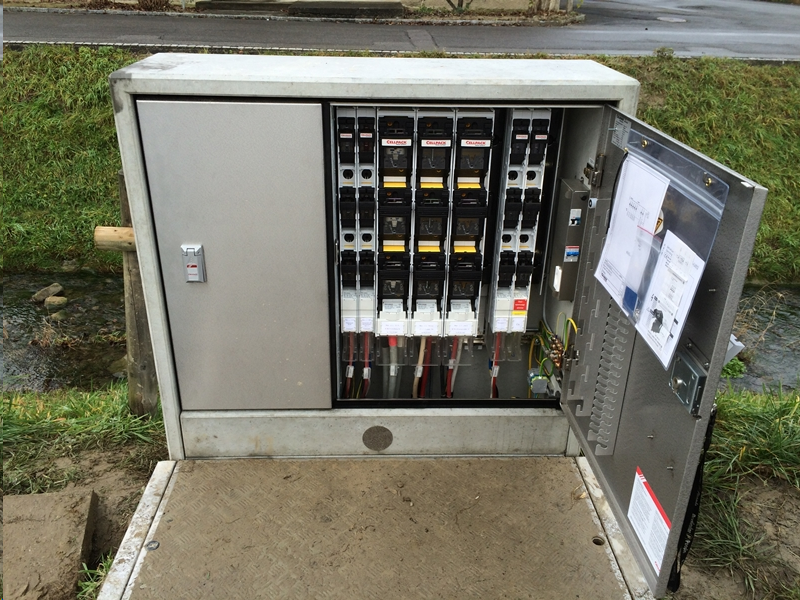
| LightingFeederPanel [474] |
|
This AssetType is classified in more detail using the AssetEntity attribute. The following subtypes are defined in the model:
Asset-Typ Detail (AssetEntity) |
Description |
Symbol |
circuit breaker |
Circuit breakers are designed for switching high currents. They are used in areas where the voltage level or current strength exceeds the capacity of fuses. Unlike load switches, circuit breakers can not only switch regular operating currents and low overload currents, but also switch on in the event of faults such as high overload currents and short-circuit currents, maintain these fault currents for a specified time and switch them off safely without damage. Circuit breakers are constructed as single-pole or three-pole devices. Furthermore, circuit breakers are the network elements at which a circuit can begin. However, circuit breakers are not necessarily circuit limiters (subnetwork controllers). |
|
on-load isolation switch 1 |
A load break switch can be used to disconnect or connect under load up to the respective rated current. The load break switch combines the properties of a load switch and a disconnect switch: - Electrical equipment can be safely switched on and off even under load. - When open (switched off), these switches have the required visible separation distance. For this purpose, load break switches are equipped with an arc extinguishing device at the contacts. For this reason, they are used instead of isolating switches to increase safety in switchgear. They are mainly used as main and transfer switches in small medium-voltage systems. They are also used to switch unloaded and loaded transformers, cables and overhead lines, and reactive current compensation capacitors. In low-voltage networks, load break switches are used to interrupt main circuits in the main distribution area. |
|
on-load isolation fuse switch 1 |
The load break switch is combined with a fuse for use in networks with higher short-circuit power. |
|
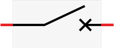
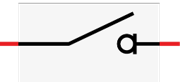
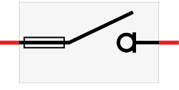
1 oad break switches and load break switches with fuses are types that occur in both FlowControlDevices and CircuitControlDevices. If a load break switch acts as a subnetwork limiter, it must be recorded as a CircuitControlDevice.
If other switch types can play the role of potential subnetwork limiters, the selection list of attributes AssetEntity for the AssetGroup CircuitControlDevice can be expanded with additional types. Please refer to the expansion guidelines in the administrator manual for the expansions.
The network attributes ‘net_ele_levelcontroller’ and “net_ele_circuitcontroller” can be used to define certain switching elements as barriers. This allows switches that are not ‘subnetwork controllers’ to still act as limiters. They can be used as network tracing barriers in a ‘Find Connected’ type network trace, thus simulating the expansion of subnets.